

Types of Paint for Interior and Exterior Surfaces: A Complete Guide
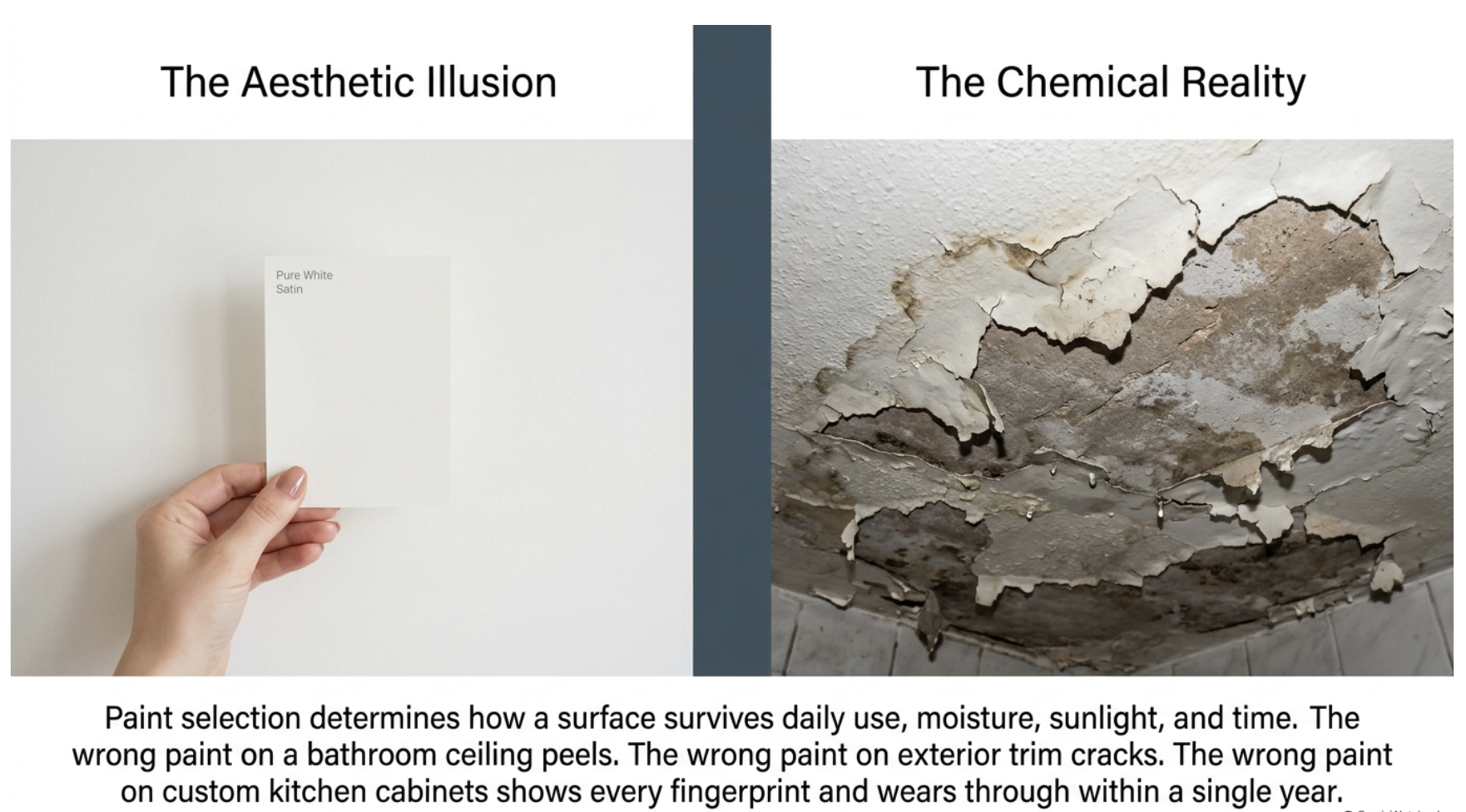
Paint selection determines how a surface survives daily use, moisture, sunlight, and time
The main types of paint are water-based latex (best for most interior walls and ceilings), 100% acrylic (the standard for exterior siding and high-traffic interiors), oil-based (hard, glossy finish for trim, doors, and metal), alkyd (similar to oil-based but with synthetic resin for smoother leveling), waterborne alkyd hybrids (oil-like hardness with water cleanup), and enamel (a catch-all term for hard-drying paints used on trim, cabinets, and high-wear surfaces). Primer is a separate category applied before the finish coat to ensure adhesion, block stains, and seal porous surfaces. In New York State, VOC regulations (6 NYCRR Part 205) cap interior flat paint at 50 g/L and non-flat finishes at 100 g/L, which restricts or eliminates most traditional oil-based interior paints from retail sale. Choosing the right paint depends on the surface, the room's function, the exposure conditions, and the desired finish.
Paint selection is a specification decision, not just a color choice. The type of paint determines how the surface holds up to daily use, moisture, sunlight, cleaning, and time. The wrong paint on a bathroom ceiling peels. The wrong paint on exterior trim cracks. The wrong paint on kitchen cabinets shows every fingerprint and wears through within a year.
This guide covers every major paint type used in residential construction: water-based latex, 100% acrylic, oil-based paint, alkyd paint, waterborne alkyd hybrids, enamel, primer, and specialty coatings. Each section includes what the paint is, where it performs best, and the top applications for interior and exterior surfaces. For guidance on sheen levels (flat, eggshell, satin, semi-gloss, high-gloss), see our guide to types of paint finishes, plus matte paint and eggshell paint.
Latex Paint (Water-Based)
Latex paint is the most common type of paint used for interior walls and ceilings. Despite the name, modern latex paint contains no actual latex rubber. It uses water as the solvent (carrier) and acrylic or vinyl-acrylic polymers as the binder. When the water evaporates, the binder forms a flexible film on the surface.
Latex dries in about one hour to the touch and can be recoated in 2-4 hours. Cleanup is soap and water. VOC content is low (typically under 50 g/L for flat, under 100 g/L for non-flat), making it compliant with New York State regulations and safe for occupied buildings with limited ventilation, which is the reality of most NYC apartments.
The trade-off: basic latex (vinyl-acrylic formulations) is less durable and less adhesive than 100% acrylic. It works well on walls and ceilings that receive light to moderate use. For high-traffic areas, moisture-prone rooms, and exterior applications, 100% acrylic is the better specification.
Top Applications for Latex Paint
Interior walls in living rooms, bedrooms, and dining rooms. The standard application. Latex in eggshell or satin finish covers well, dries fast, and cleans up easily. For a kitchen renovation or high-moisture bathroom, upgrade to 100% acrylic for better durability.
Ceilings. Flat latex ceiling paint minimizes light reflection and hides imperfections in older plaster ceilings (common in pre-war NYC apartments). Most ceiling paints are specifically formulated with higher viscosity to reduce dripping.
Low-traffic hallways and closets. Areas that see minimal wear and no moisture exposure. Latex handles these conditions well at the lowest cost per gallon.
100% Acrylic Paint (Water-Based, Premium)
100% acrylic paint is the premium tier of water-based paint. It uses pure acrylic resin as the binder (instead of the vinyl-acrylic blend found in basic latex), which delivers superior adhesion, flexibility, UV resistance, and moisture resistance. This is the paint that professional painters specify when "latex" needs to perform at a higher level.
The flexibility of acrylic resin is why it dominates exterior applications. Exterior surfaces expand and contract with temperature changes. Rigid paints crack. Acrylic paint flexes with the substrate, maintaining its bond through thermal cycling. Combined with UV resistance (the paint does not yellow or chalk as quickly as oil-based products in sunlight), 100% acrylic is the industry standard for exterior siding, trim, and virtually all outdoor surfaces.
Inside the home, 100% acrylic outperforms basic latex in kitchens, bathrooms, hallways, and any area with heavy traffic or moisture exposure. The cost per gallon is higher than basic latex, but the longevity justifies it.
Top Applications for 100% Acrylic Paint
Exterior siding (wood, fiber cement, stucco, vinyl). The default exterior paint. Brands like Benjamin Moore Aura Exterior and Sherwin-Williams Duration Exterior are 100% acrylic formulations designed for multi-decade exterior performance.
Exterior trim and fascia. Acrylic in semi-gloss or satin withstands weather, resists mildew, and holds color longer than oil-based alternatives in exterior applications.
Kitchens and bathrooms. Moisture-resistant 100% acrylic in satin or semi-gloss handles steam, splashes, and frequent cleaning. Benjamin Moore Aura Bath and Spa is a category-specific example.
High-traffic interiors (hallways, mudrooms, children's rooms). Scuff resistance and washability exceed basic latex.
Custom millwork in low-wear applications. Built-in bookshelves, wall paneling, and decorative millwork that won't receive heavy daily contact. For painted millwork that will be handled daily, specify a waterborne alkyd instead. See our custom millwork services.
Oil-Based Paint
Oil-based paint uses a drying oil (traditionally linseed oil) or an alkyd resin dissolved in a petroleum-based solvent (mineral spirits). It cures through oxidation rather than evaporation, producing an extremely hard, smooth, glossy surface that levels beautifully and resists abrasion. For decades, oil-based paint was the standard for trim, doors, cabinets, and any surface requiring a durable, furniture-grade finish. The leveling properties (the ability to flow and settle into a smooth, brush-mark-free surface) remain unmatched by most water-based products.
The trade-offs are significant. Oil-based paint has high VOC content (typically 300-400+ g/L), strong odor during application and curing, 6-8 hour dry time per coat, and cleanup requires mineral spirits or paint thinner. New York State VOC regulations (6 NYCRR Part 205) have effectively eliminated traditional oil-based paint from retail sale for interior use in most categories, though it remains available for certain specialty applications and exterior use.
Oil-based paint also yellows over time, particularly in low-light areas (closets, behind furniture, north-facing rooms). This yellowing is a chemical property of the drying oil and cannot be prevented.
Top Applications for Oil-Based Paint
Exterior metal surfaces (railings, iron fences, gates, fire escapes). Oil-based paint bonds to metal and resists corrosion better than most water-based alternatives. This remains a primary use case in NYC.
Stain-blocking primer on severe stain situations. Water stains, smoke damage, tannin bleed from cedar or redwood. Oil-based primers (Zinsser Cover Stain, Kilz Original) block stains that water-based primers cannot.
Historic restoration where specification requires oil-based products. Some landmark restoration projects require matching the original paint chemistry.
For the complete guide to working with oil-based paint in NYC, including VOC compliance and best practices, see Oil-Based Paint in NYC.
Alkyd Paint
Alkyd paint is often used interchangeably with "oil-based," but there is a technical distinction. Traditional oil-based paint uses natural drying oils. Alkyd paint uses a synthetic alkyd resin (an oil-modified polyester) as the binder, carried in a petroleum solvent. The alkyd resin produces a harder, more durable film than natural oil alone, with better color retention and faster drying.
In practice, most modern "oil-based" paints sold at retail are actually alkyd formulations. Pure linseed oil paint is now a niche product used primarily in historic preservation. When a painter says "oil-based," they almost always mean alkyd.
Alkyd paint shares the same VOC, odor, and yellowing limitations as traditional oil-based paint. New York State's 6 NYCRR Part 205 applies equally to alkyd formulations, restricting their use for interior applications.
Top Applications for Alkyd Paint
Interior trim, doors, and window casings (where VOC regulations permit). Alkyd produces the smoothest, hardest finish on trim. The leveling is exceptional: brush marks disappear as the paint flows and settles. This is why painters who work in pre-war apartments with complex crown moldings and door casings still reach for alkyd when they can. See our guide to custom wood trim.
Cabinets and furniture. The hard cure and smooth leveling make alkyd the traditional choice for a furniture-grade finish on kitchen cabinets. Alkyd-painted cabinet doors resist chipping and scuffing better than most latex paints.
Metal surfaces (radiators, pipes, structural steel). Alkyd bonds well to metal and provides corrosion protection.
For the full specification guide, including NYC VOC considerations and application techniques, see Your Essential Guide to Working with Alkyd Paint.
Waterborne Alkyd Paint (Hybrid)
Waterborne alkyd paint (also called water-based alkyd or hybrid alkyd) is the most significant development in paint chemistry in the last decade. It uses a modified alkyd resin carried in water instead of petroleum solvent. The result: the hard cure, smooth leveling, and scuff resistance of traditional alkyd with the low VOC, low odor, fast dry time, and water cleanup of latex.
This is the paint category that has largely replaced traditional alkyd for interior trim, doors, and cabinets in markets with strict VOC regulations. Benjamin Moore Advance and Sherwin-Williams Emerald Urethane Trim Enamel are the two most specified products in this category for NYC residential renovation.
The trade-off: waterborne alkyds have a longer recoat time than standard latex (typically 16-24 hours between coats versus 2-4 hours for latex). They also require careful application technique because the paint remains open (workable) longer than latex, which can lead to drag marks if the painter overworks the surface.
Top Applications for Waterborne Alkyd Paint
Interior trim, doors, and window casings. The primary replacement for traditional alkyd in VOC-regulated markets. The finish levels nearly as well as solvent-based alkyd, cures hard, and resists scuffing on high-touch surfaces.
Kitchen cabinets. Benjamin Moore Advance in semi-gloss or satin is the most commonly specified cabinet paint in NYC residential renovation. The waterborne alkyd formula produces a hard, smooth, washable finish without the VOC and odor issues of traditional alkyd. Applied over a bonding primer, it performs comparably to sprayed lacquer at a fraction of the cost.
Bathroom vanity cabinets and custom millwork. Any millwork surface that needs a hard, washable finish and encounters daily use.
Radiators. Waterborne alkyd handles the heat cycling of radiators without yellowing (traditional alkyds yellow on radiators due to heat-accelerated oxidation).
Enamel Paint
Enamel is not a distinct paint chemistry. It is a performance category: any paint that dries to a hard, glossy, durable finish is called an enamel. Enamel paints can be oil-based, alkyd, waterborne alkyd, or acrylic. The defining characteristic is the cured hardness of the film, not the binder type.
When a specification calls for "enamel," it means a paint that cures harder than standard wall paint, resists chipping and scuffing, and is typically applied in semi-gloss or high-gloss paint finishes. The sheen and the hardness work together: higher sheen makes the surface easier to clean, and the hard cure makes it more resistant to damage.
Top Applications for Enamel Paint
Doors (interior and exterior). The front door of a NYC brownstone is one of the highest-impact paint applications in residential construction. A quality enamel in high-gloss or semi-gloss on a properly prepared door produces a finish that lasts years and signals quality from the street.
Trim, baseboards, and crown molding. Enamel resists scuffing from vacuum cleaners, furniture, and foot traffic along baseboards. Semi-gloss enamel on trim creates a visual contrast with matte or eggshell walls.
Stair railings and banisters. High-touch, high-wear surfaces that need a hard finish.
Kitchen and bathroom cabinets. Cabinet-grade enamel (such as Benjamin Moore Advance or Sherwin-Williams Emerald Urethane) produces a factory-like finish when applied by a skilled New York City painter.
Primer: The Foundation Coat
Primer is not a finish paint. It is a preparatory coating applied before the finish coat to ensure adhesion, block stains, seal porous surfaces, and create a uniform base for the topcoat. Skipping primer is the most common cause of paint failure on new, bare, or problem surfaces.
Types of Primer
Latex primer (water-based). The general-purpose option. Good adhesion to drywall, previously painted surfaces, and most interior substrates. Low VOC, fast drying, water cleanup. Use for: new drywall, minor color changes, clean previously painted surfaces.
Acrylic bonding primer. A higher-performance water-based primer with superior adhesion to difficult substrates (glossy surfaces, tile, laminate, PVC trim). Use for: surfaces where standard primer won't grip, renovation projects painting over existing glossy finishes.
Oil-based / alkyd primer. The strongest stain-blocking primer available. Penetrates deeper into porous surfaces and seals water stains, smoke damage, tannin bleed, and persistent odors that water-based primers cannot contain. Use for: severe stain situations, bare wood with tannin (cedar, redwood, mahogany), fire and water damage restoration.
Shellac primer (BIN). The ultimate stain blocker. Zinsser BIN shellac-based primer blocks virtually any stain including pet odors, permanent marker, and nicotine. Dries in 15-20 minutes. Use for: extreme stain and odor blocking, spot priming on problem areas.
Top Applications for Primer
New drywall. Latex drywall primer seals the porous paper face and joint compound, creating a uniform surface for the finish coat. Without primer, the finish paint absorbs unevenly, producing a blotchy appearance called "flashing."
Bare wood (trim, doors, millwork). Oil-based or acrylic primer seals the grain, prevents tannin bleed, and creates a smooth base for enamel topcoats.
Stain and odor blocking. Oil-based or shellac primer over water stains, smoke damage, crayon, marker, and pet stains. These primers encapsulate the stain so it cannot bleed through the finish coat.
Color transitions. A tinted primer under the finish coat reduces the number of topcoats needed when changing from a dark color to a light one (or vice versa).
Specialty Paints
Beyond the standard categories, several specialty formulations serve specific applications in residential construction.
Epoxy Paint
A two-component coating (resin + hardener) that cures to an extremely hard, chemical-resistant surface. Used for garage floors, basement floors, and commercial kitchen floors. Not a typical wall paint. Requires precise mixing ratios and limited working time once mixed.
Masonry Paint
Formulated specifically for concrete, brick, stone, stucco, and cinder block. Contains additives that allow the paint to bond to alkaline mineral surfaces and resist the efflorescence (white salt deposits) that can push standard paint off masonry surfaces. Used for: foundation walls, basement walls, exterior brick, retaining walls.
Chalk Paint
A heavily pigmented, matte-drying paint that adheres to most surfaces with minimal prep (no sanding, no priming in most cases). Popular for furniture refinishing and decorative applications. The finish is ultra-matte and can be sealed with wax or polyurethane for durability. Not a construction-grade product, but it has a role in custom furniture and decorative millwork.
Milk Paint
An ancient paint formula made from milk protein (casein), lime, and pigment. Produces a distinctive matte, slightly chalky finish with natural color variation. Used in historic restoration, furniture making, and design applications where a hand-finished, aged appearance is desired. Requires a bonding agent on non-porous surfaces.
Limewash
A mixture of slaked lime and water that penetrates into plaster and masonry rather than sitting on top like film-forming paints. Produces a soft, chalky, slightly translucent finish with organic variation. Increasingly popular in high-end residential interiors (living rooms, bedrooms, feature walls) for its textural, old-world aesthetic. Not suitable for drywall without specialized preparation.
Cabinet-Grade Paint
Not a separate chemistry, but a marketing and performance category for paints specifically formulated to withstand the demands of kitchen cabinets: frequent cleaning, moisture, grease, fingerprints, and daily handling. Products like Benjamin Moore Advance, Sherwin-Williams Emerald Urethane, and Fine Paints of Europe Eurolux are marketed as cabinet-grade. The key performance characteristics are hard cure, smooth leveling, scuff resistance, and washability.
Paint Finishes: A Quick Overview
The type of paint (latex, acrylic, alkyd, enamel) determines the paint's chemistry and performance properties. The finish (also called sheen) determines how much light the dried surface reflects. The two are independent choices: you can get latex in flat or semi-gloss, alkyd in satin or high-gloss, and so on.
The standard sheen levels, from least to most reflective: flat (matte), eggshell, satin, semi-gloss, and high-gloss. Each sheen has different characteristics for durability, washability, and how it shows surface imperfections. Flat hides imperfections but is harder to clean. High-gloss is extremely durable and washable but reveals every flaw in the substrate.
Sheen selection affects how a room reads visually, how the paint performs in daily use, and how the finish interacts with lighting. For the complete guide to choosing the right paint finishes for each room and surface, see Types of Paint Finishes: How to Choose the Right Sheen for Every Surface.
NYC VOC Regulations: What Matters for Paint Selection
New York State regulates the VOC (Volatile Organic Compounds) content of architectural coatings under 6 NYCRR Part 205. These regulations directly affect which paint types are available for interior and exterior use in NYC.
The current limits:
| Coating Category | VOC Limit (g/L) |
|---|---|
| Interior flat | 50 |
| Interior non-flat | 100 |
| Interior non-flat, high-gloss | 150 |
| Specialty primers, sealers, undercoaters | 100 |
Traditional oil-based and alkyd paints typically exceed these limits (300-400+ g/L), which means they are restricted or unavailable at retail for interior architectural use in New York. This is why waterborne alkyd hybrids (Benjamin Moore Advance, Sherwin-Williams Emerald Urethane) have replaced traditional alkyds as the standard for trim and cabinets in NYC residential renovation.
For occupied apartments and co-ops with limited ventilation (which describes most NYC residential projects), low-VOC and zero-VOC paints are strongly recommended regardless of the legal limit. The NYC Department of Health advises against applying high-VOC coatings in occupied buildings.
How to Choose the Right Paint Type
The surface and the room determine the paint type. Here is the decision framework:
| Surface | Specification |
|---|---|
| Interior walls (living room, bedroom, dining room) | Latex or 100% acrylic in eggshell or satin |
| Interior walls (kitchen, bathroom) | 100% acrylic with mildew resistance in satin or semi-gloss |
| Interior ceilings | Flat latex ceiling paint |
| Interior trim, doors, window casings | Waterborne alkyd in semi-gloss (the NYC trim standard) |
| Kitchen cabinets | Cabinet-grade waterborne alkyd over a bonding primer |
| Custom millwork (built-ins, paneling, bookshelves) | Waterborne alkyd or high-quality acrylic enamel |
| Exterior siding | 100% acrylic in flat or satin |
| Exterior trim and fascia | 100% acrylic in semi-gloss |
| Front door | Exterior enamel in semi-gloss or high-gloss |
| Metal surfaces (railings, fences, gates) | Oil-based or alkyd with rust-inhibiting primer, or direct-to-metal acrylic |
| Bare wood (new trim, new millwork) | Oil-based or acrylic primer first, then the specified topcoat |
| Stain and damage repair | Oil-based or shellac primer to block, then the specified topcoat |
For kitchen walls, specify a moisture-rated formula like Benjamin Moore Aura Bath and Spa. Sprayed application produces the smoothest cabinet finish; brushed and rolled application is acceptable with proper technique. The highest-quality paint in the project should go on the front door because it is the first thing visitors see.
Frequently Asked Questions
What are the main types of paint?
Water-based latex and acrylic paints (for most interior and exterior surfaces), oil-based and alkyd paints (for trim, metal, and specialty applications), waterborne alkyd hybrids (oil-like hardness with water cleanup), and specialty coatings (epoxy, masonry, chalk, milk, limewash). Each type has different adhesion, durability, drying time, and VOC characteristics.
What is the best paint for interior walls?
For most interior walls, 100% acrylic latex in eggshell or satin finish. It dries quickly, has low VOC, cleans up with water, and provides good durability and washability. For kitchens and bathrooms, upgrade to a moisture-resistant formula.
What is the best paint for exterior surfaces?
100% acrylic exterior paint. The acrylic resin provides superior UV resistance, flexibility (critical for surfaces that expand and contract with temperature), and moisture resistance. It is the industry standard for exterior siding, trim, and fascia.
Can you use oil-based paint in NYC?
For interior use, traditional oil-based and alkyd paints are restricted under New York State VOC regulations (6 NYCRR Part 205). Most have been replaced by waterborne alkyd hybrids for trim and cabinet work. Oil-based paint is still available for certain exterior and specialty applications. See our full guide to oil-based paint in NYC.
What is the difference between latex and acrylic paint?
Both are water-based. Basic latex uses a vinyl-acrylic blend as the binder, which is less durable and less flexible. 100% acrylic uses pure acrylic resin, delivering better adhesion, UV resistance, moisture resistance, and longevity. For exterior applications and high-use interiors, 100% acrylic is the better specification.
What is waterborne alkyd paint?
A hybrid formulation that uses alkyd resin carried in water instead of petroleum solvent. It delivers the hard cure, smooth leveling, and scuff resistance of traditional alkyd with the low VOC, low odor, and water cleanup of latex. Benjamin Moore Advance and Sherwin-Williams Emerald Urethane are the most common products in this category.
What type of paint should I use on kitchen cabinets?
Cabinet-grade waterborne alkyd (Benjamin Moore Advance or Sherwin-Williams Emerald Urethane) over a bonding primer. The waterborne alkyd formula cures hard, levels smoothly, resists scuffing and grease, and is VOC-compliant for NYC interior use.
What is the difference between paint and primer?
Paint is the finish coat that provides color, sheen, and surface protection. Primer is a preparatory coat applied before the finish to ensure adhesion, block stains, seal porous surfaces, and create a uniform base. Primer is not optional on bare, stained, or challenging surfaces.
Paint selection is a specification decision that affects how every surface in a renovation looks and performs for years. The type (latex, acrylic, alkyd, waterborne hybrid, enamel) determines durability, adhesion, and maintenance. The finish determines sheen, washability, and visual impact. And in NYC, VOC regulations narrow the field for interior work, making waterborne alkyd hybrids the standard for any surface that needs a hard, smooth finish.
If you are planning a renovation and need guidance on paint specification for interior or exterior surfaces, start a conversation with us. CooperBuild is a general contractor in New York City whose painting team coordinates paint selection, prep, and application as part of every renovation project. See completed work in our project portfolio.
- Category: Expert Advice / Painting
- Topic: Types of Paint for Interior and Exterior Surfaces
- Author: CooperBuild Team
- Published: November 2026
- Sources:
- • NYS DEC: 6 NYCRR Part 205
- • Benjamin Moore Advance
- • Sherwin-Williams Emerald Urethane
- • Zinsser Cover Stain
- • Fine Paints of Europe
Planning Paint Specification for a Renovation?
CooperBuild specifies and applies interior and exterior paint as part of custom residential projects in NYC, the Hamptons, and South Florida. From VOC-compliant trim enamels to moisture-rated kitchen and bath formulas, we match the paint type to the surface before the first coat goes on.
Start a ConversationSubscribe to Our Newsletter
Get the latest insights, trends, and news from the construction industry delivered straight to your inbox.
We respect your privacy. Unsubscribe at any time.