

Building Technology in Construction: Trends, Tools, and Best Practices (2026)
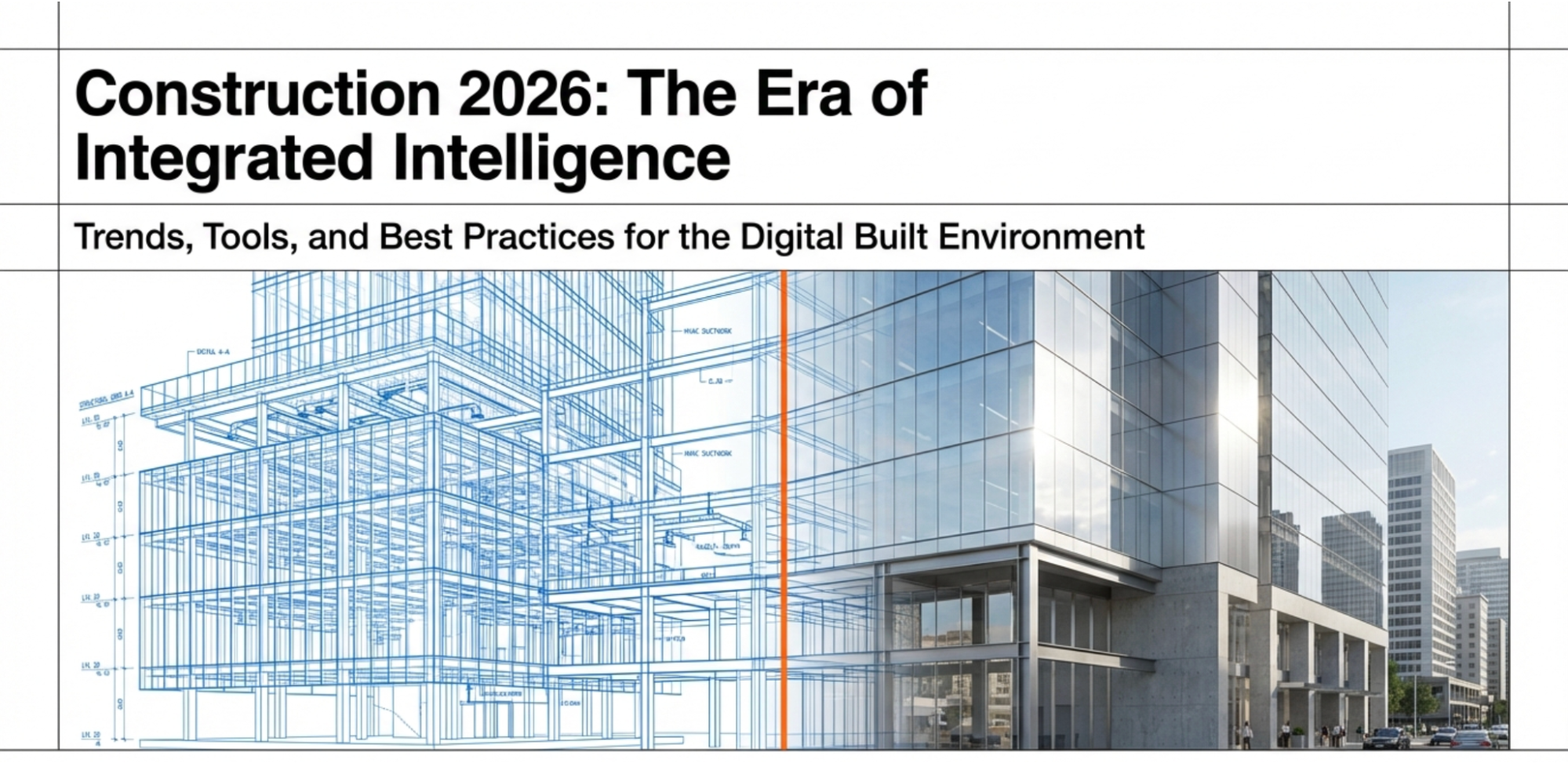
Construction site utilizing integrated digital tools and building technology in 2026
In 2026, building technology in construction is defined by integrated digital systems, automation, and data-driven execution. Construction companies are moving beyond isolated tools and adopting BIM, artificial intelligence, modular construction, IoT-connected construction sites, and advanced building materials across the full construction process. These technologies are reducing project delays, controlling cost overruns, improving worker safety, and helping construction firms deliver complex construction projects with greater predictability and sustainability.
Purpose and Target Audience
This blog is written for construction professionals, construction managers, project managers, architects, designers, and informed homeowners who want a clear, factual understanding of how construction technology is impacting building projects today. The focus is practical application, not speculation, how technology is actually used on construction sites and within construction firms in 2026.
Executive Summary for the Construction Industry
The construction industry is experiencing a structural shift driven by labor constraints, cost pressure, and sustainability mandates. Digital transformation is no longer optional. Research from global construction sector studies shows that many construction companies now rely on connected systems to manage project scheduling, costs, safety, and performance.
Industry-wide adoption of construction technology is accelerating, particularly among mid-sized and large construction firms delivering complex projects. The top business outcomes executives now measure are schedule reliability, cost predictability, and operational efficiency across project delivery.
Construction Technology Landscape
Building technology in construction refers to the combined use of digital technology, automated equipment, data platforms, and advanced construction materials across the entire project lifecycle. This includes early-stage construction project planning, execution on active job sites, and long-term building operations.
Unlike traditional construction methods, modern construction technology connects systems rather than isolating them. Design data feeds scheduling tools, cost models update in real time, and site conditions inform decision-making before errors become expensive. Regulatory pressure and sustainability initiatives are accelerating this shift, particularly for energy efficient and sustainable buildings.
Key Construction Technologies Shaping Projects in 2026
Construction technology impacting the industry today is defined by maturity and integration. Tools that cannot connect to project management software or support real time data exchange are rapidly being phased out.
Building Information Modeling (BIM)
Building information modeling (BIM) is the backbone of digital construction. It is a shared, data-rich model that represents building design, structure, systems, and materials in a single coordinated environment. BIM connects architectural intent with structural systems, construction materials, and sequencing logic.
In practice, BIM reduces data entry errors and coordination failures that cause project delays. Construction managers use BIM to detect clashes before construction begins, while project managers rely on it to align project scheduling, resource allocation, and cost tracking. Studies consistently show BIM-driven projects achieve higher project completion reliability and lower rework rates, especially on complex construction projects.
Artificial Intelligence and Machine Learning
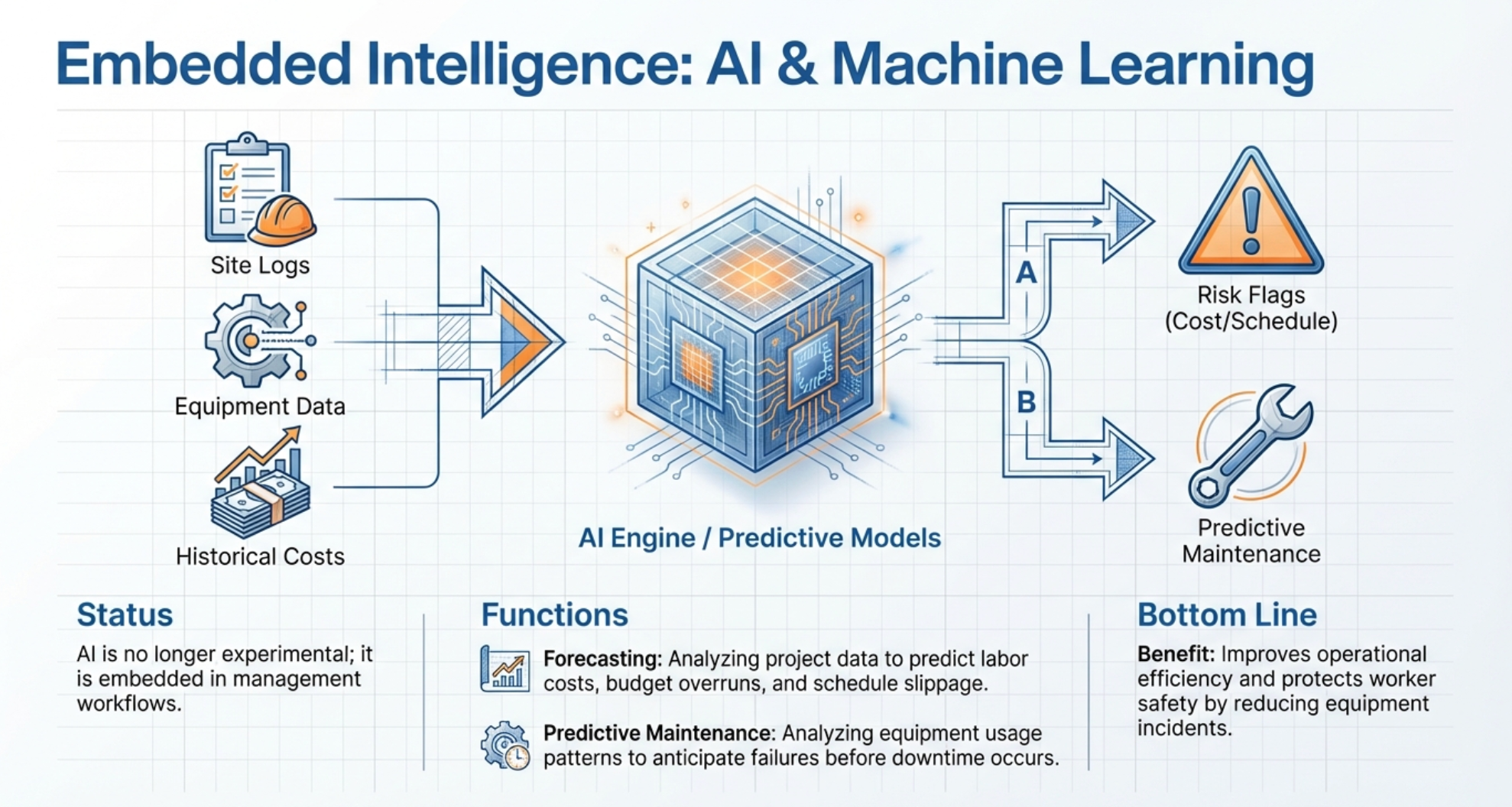
ai machine learning status and function
Artificial intelligence and machine learning are now embedded in construction management workflows rather than treated as experimental tools. AI systems analyze project data to forecast risks related to labor costs, project costs, and schedule slippage. Machine learning models improve accuracy as more project data is captured over time.
A common use case is predictive maintenance. Equipment usage patterns from construction sites are analyzed to anticipate failures before downtime occurs. This directly improves operational efficiency and protects worker safety by reducing equipment-related incidents. For construction firms, AI adoption is measured through improved project outcomes rather than novelty.
3D Printing in Construction
3D printing is transitioning from pilot demonstrations to targeted production use. In 2026, additive manufacturing is primarily used for offsite construction components, formwork systems, and non-structural building elements. The technology reduces waste and shortens fabrication timelines while lowering transportation and storage costs.
Material constraints remain a limiting factor. Most systems rely on specialized concrete mixes, and regulatory approval for load-bearing elements is still evolving. As a result, construction companies are deploying 3D printing selectively, focusing on repeatable components rather than full building structures.
Augmented Reality and Virtual Reality
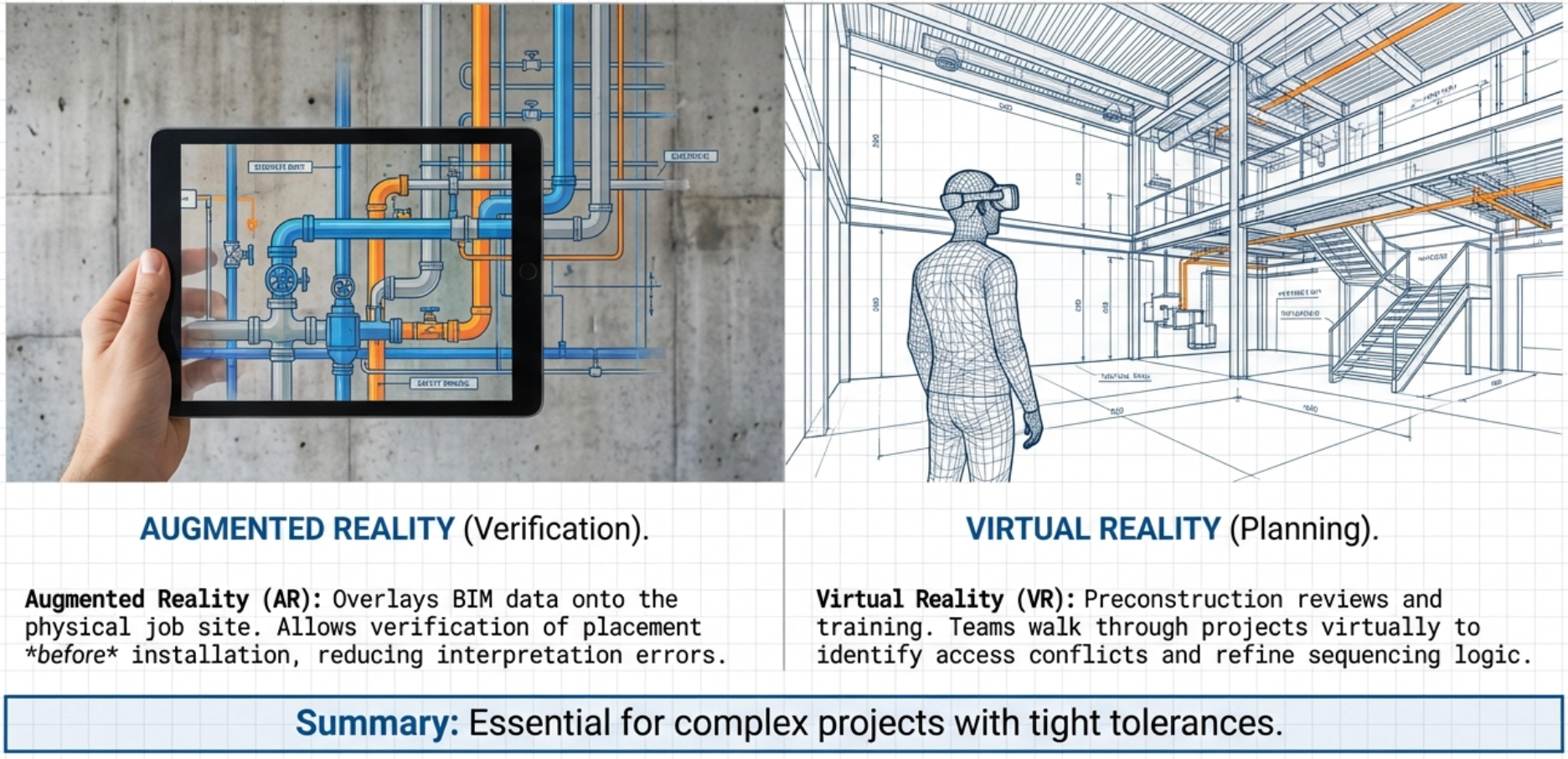
Augmented vs virtual reality
Augmented reality and virtual reality are increasingly used to bridge the gap between digital models and physical construction. AR overlays BIM data directly onto construction sites, allowing construction professionals to verify placement before installation begins. This reduces interpretation errors and minimizes rework.
Virtual reality is primarily used for training and preconstruction reviews. Construction workers and project managers can walk through building projects virtually, identify access conflicts, and refine sequencing logic before crews mobilize. These tools are especially valuable on complex projects with tight tolerances.
Drones and Robotics
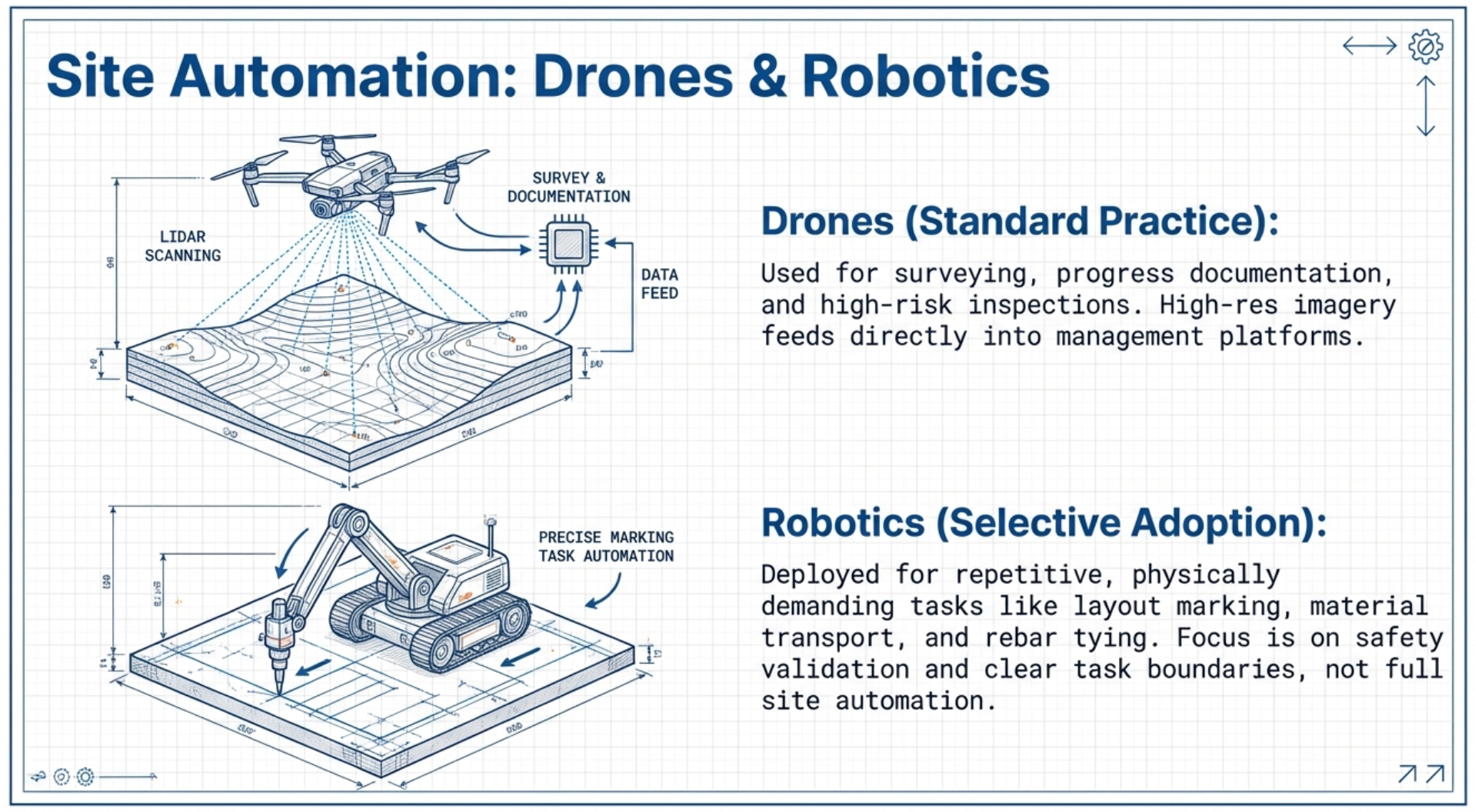
Site automation using drones and robotics
Drones are now standard tools on many construction sites. They are used for surveying, progress documentation, and inspections that would otherwise expose construction workers to risk. High-resolution imagery feeds directly into construction management platforms, improving visibility into project's progress.
Robotics adoption is more selective. Robots are most effective for repetitive, physically demanding tasks such as layout marking, material transport, and rebar tying. Successful deployments focus on safety validation and clear task boundaries rather than full automation.
Digital Twins and Predictive Analytics
Digital twins extend BIM into the operational phase of building projects. A digital twin is a live model connected to real time data from building systems. This allows construction firms and owners to monitor energy use, system performance, and maintenance needs throughout building operations.
Predictive analytics rely on accurate inputs. Energy consumption, equipment runtime, and environmental conditions feed models that support sustainable technology goals. Digital twins are particularly valuable for large facilities where operational efficiency directly affects long-term costs.
Advanced Building Materials
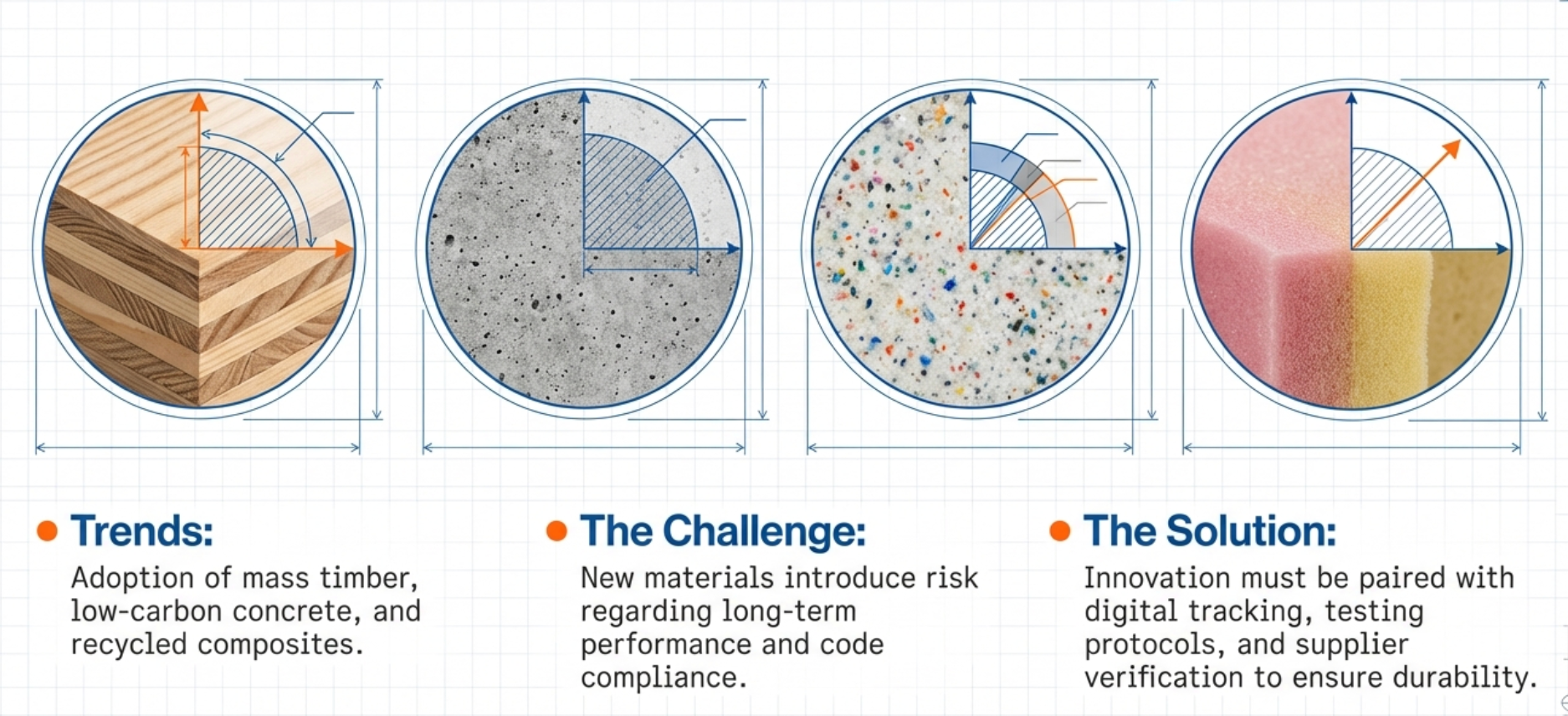
Advanced building materials trends, challenges and solutions
Innovation in building materials is driven by sustainability and performance. Low-carbon concrete, mass timber systems, recycled composites, and high-performance insulation materials are gaining adoption across the construction sector. These materials support sustainable construction while meeting structural and durability requirements.
However, new materials introduce risk. Construction firms must implement testing protocols, mock-ups, and supplier verification to ensure compliance with codes and long-term performance expectations. Material innovation is most successful when paired with digital tracking and quality control systems.
Connected Construction Sites and IoT
Connected construction sites rely on sensors and IoT devices to collect real time data on equipment, materials, and environmental conditions. This data improves decision-making during construction and reduces blind spots that lead to project delays.
Common applications include equipment tracking, environmental monitoring, and worker location awareness. When integrated into construction management systems, IoT data helps optimize resource allocation and improve construction safety without adding administrative burden.
Modular and Offsite Construction
Modular construction and offsite construction continue to expand due to labor constraints and schedule pressure. By shifting work from job sites to controlled environments, construction companies reduce variability and improve quality control.
Modular approaches are most effective for projects with repeatable layouts such as residential buildings, hotels, healthcare facilities, and schools. When combined with BIM and digital project planning, modular construction significantly improves project delivery timelines.
Construction Management Integration
Technology only delivers value when systems are integrated. Construction management platforms now act as central hubs connecting BIM, scheduling tools, cost controls, and field data. Project managers play a critical role in aligning workflows and enforcing data standards.
Successful integration requires clear ownership, defined reporting cadence, and alignment between construction teams and technology vendors. Without this structure, digital tools increase complexity instead of reducing it.
Construction Safety and Site Stewardship
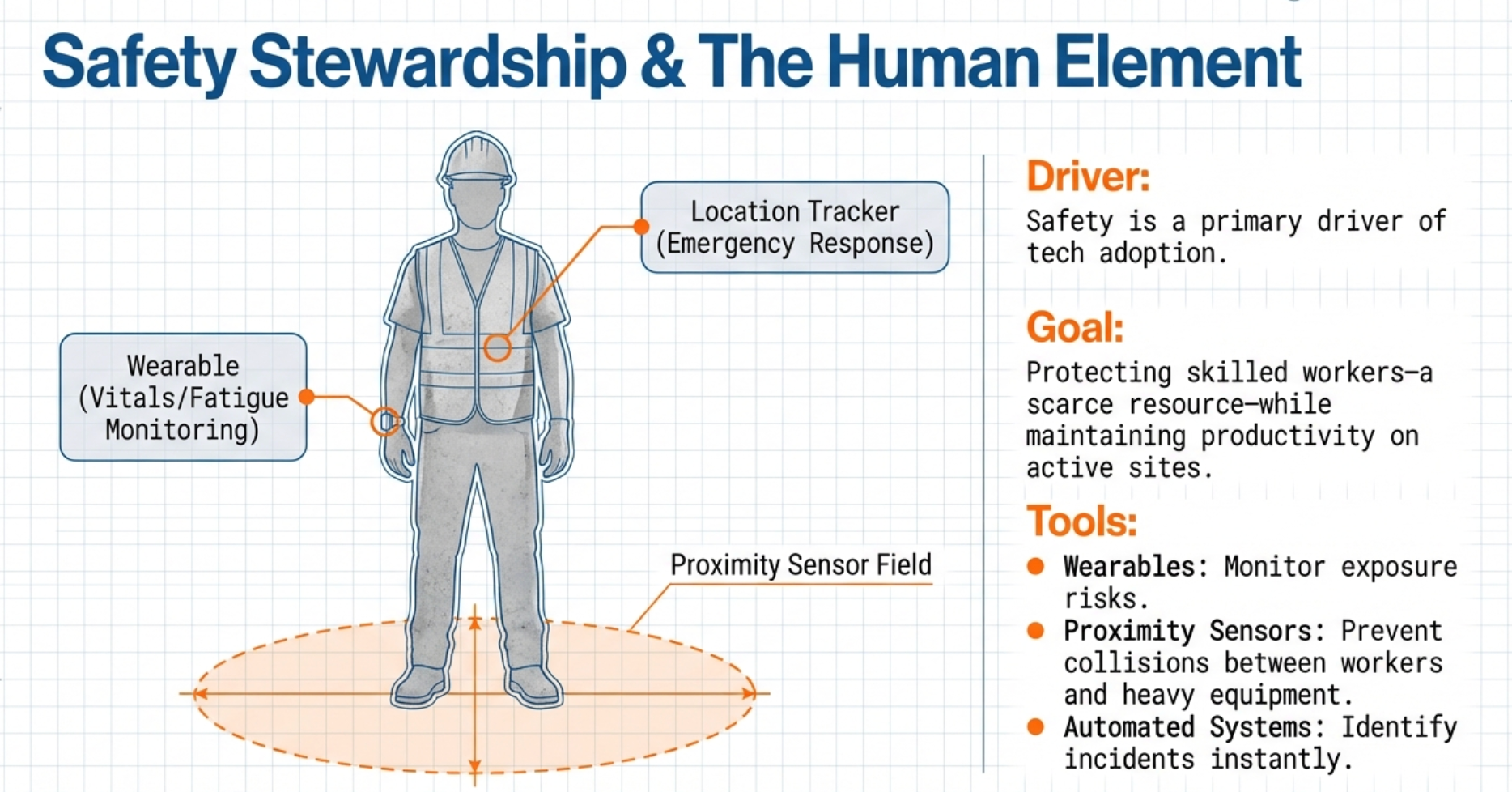
Construction safety and site stewardship
Construction safety remains one of the strongest drivers of technology adoption. Wearable technology is used to monitor vital signs, fatigue, and exposure risks. Proximity sensors reduce collision risks between workers and equipment.
Automated safety systems support faster emergency response by identifying incidents and locations instantly. These tools help construction firms protect skilled workers while maintaining productivity on active job sites.
Measuring Impact and KPIs
Measuring the impact of construction technology requires baseline data. Productivity, safety, cost variance, and schedule adherence are the most common KPIs used by construction companies. Dashboards that surface real time data enable faster intervention and better project management decisions.
The most effective metrics focus on outcomes rather than tool usage. Improved project outcomes signal successful digital transformation.
Future Trends and Strategic Recommendations
Looking ahead, the convergence of AI, BIM, and real time site data will define future projects. Construction firms are preparing for deeper automation in project planning, expanded use of sustainable materials, and greater reliance on predictive analytics.
Strategically, firms should adopt technology in phases, prioritize interoperability, and align sustainability initiatives with procurement decisions. This approach reduces risk while maintaining a competitive edge in a rapidly evolving construction business.
The Path Forward for a Digitally Built Construction Industry
Building technology in construction in 2026 is practical, integrated, and outcome-driven. Construction companies that adopt digital tools with discipline are completing projects faster, safer, and with greater cost control. Those relying on traditional methods face increasing pressure from labor shortages, rising costs, and complex technology demands. The future of construction belongs to firms that treat technology as core infrastructure, not an add-on.
FAQs
Subscribe to Our Newsletter
Get the latest insights, trends, and news from the construction industry delivered straight to your inbox.
We respect your privacy. Unsubscribe at any time.