

Matte Paint: Choosing the Right Finish for Interior Walls
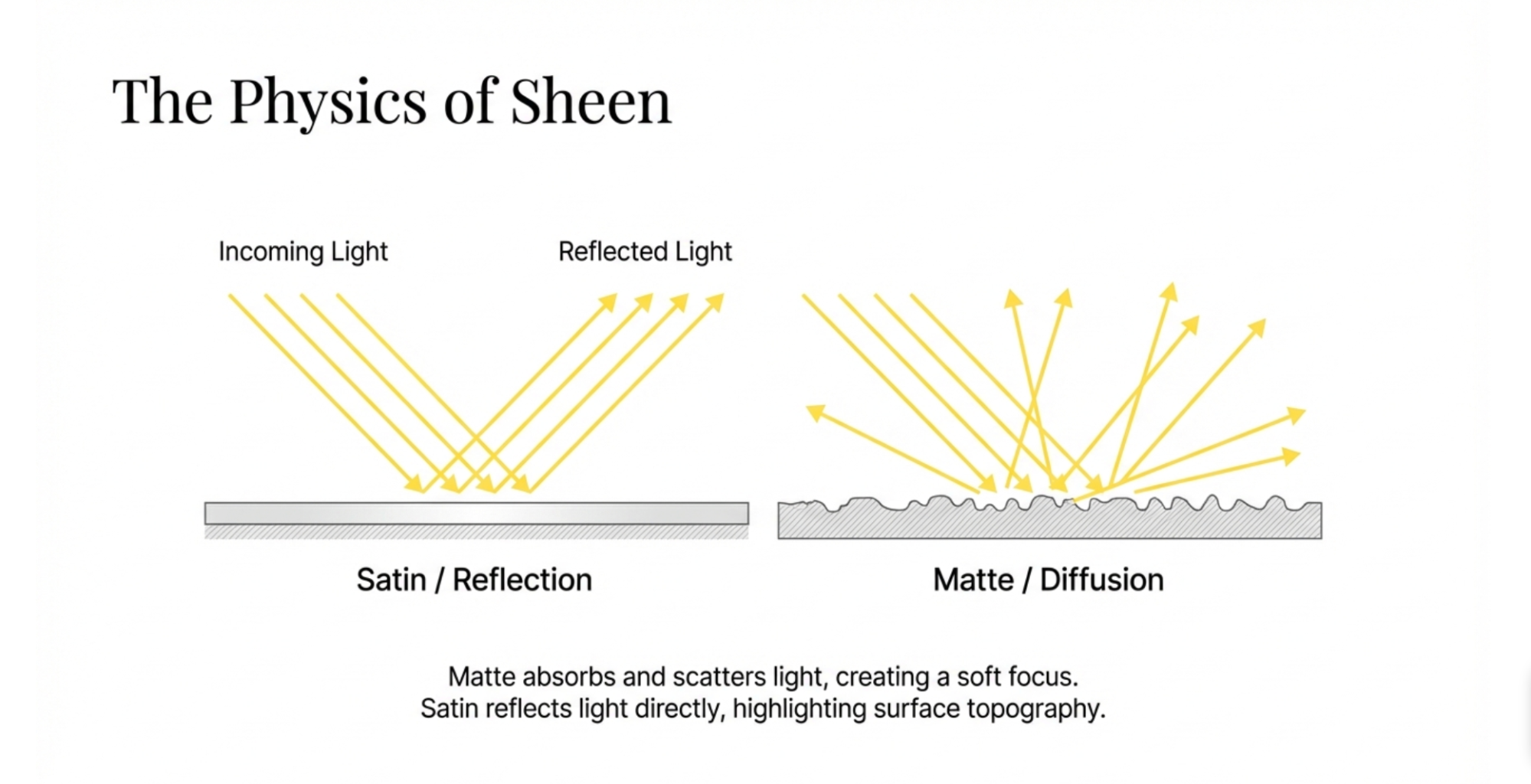
Light interaction comparison of matte paint vs satin paint
Matte paint is a low sheen, non-reflective paint finish that hides surface imperfections and creates depth on interior walls. It is best for low traffic areas such as bedrooms, living rooms, ceilings, and formal dining rooms where appearance matters more than washability. Compared to satin paint finishes, matte finish paint offers better concealment but lower durability. If the wall needs frequent cleaning, choose satin. If the wall needs visual softness and richness, choose matte.
What Matte Paint Is and How It Behaves on Interior Walls
Matte paint, often grouped with flat paint, is a lower sheen paint that absorbs light instead of reflecting it. In practical terms, it does not shine. When light hits a matte surface, it diffuses rather than bounces back. This is why matte hides imperfections better than satin paint or semi gloss.
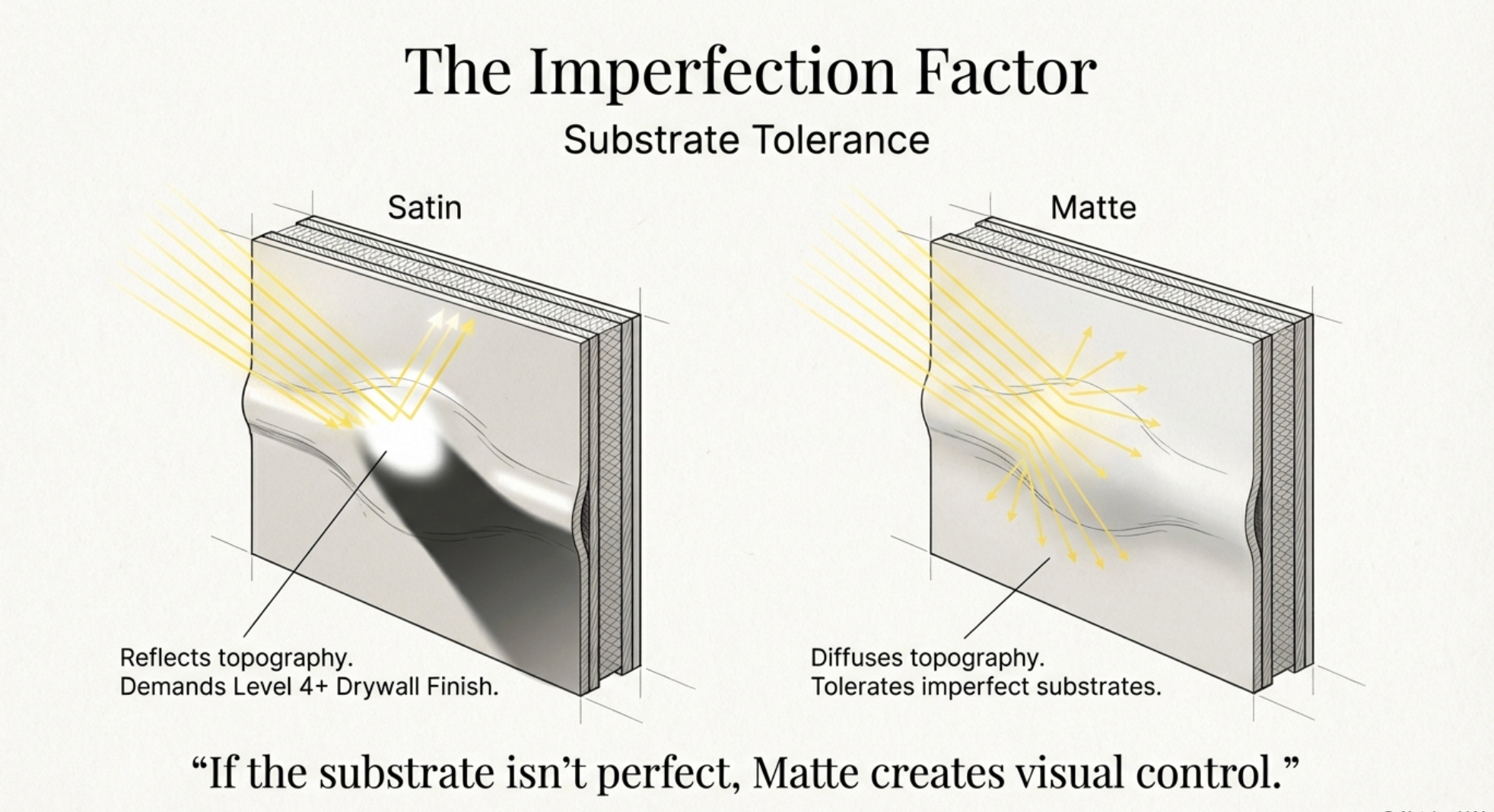
This matters on real projects. Most interior walls are not perfectly smooth. Drywall seams, minor patch repairs, and subtle bumps are common. A glossy finish or even a satin finish will highlight those imperfections because it reflects light. Matte reduces that visual noise.
 substrate tolerance of matte vs satin paint
For young architects and designers, the takeaway is simple: if the substrate quality is not perfect, a matte finish creates visual control. It softens the wall and produces a smooth, cohesive appearance. In living rooms and family rooms, this creates a calm, cozy atmosphere that feels intentional rather than imperfect.
Matte Paint Finishes vs Satin Paint Finishes
Each paint finish interacts with light, surface condition, and maintenance differently. Matte absorbs light. Satin reflects it. That difference drives everything else.
Satin paint has a subtle shine. It forms a tighter, more durable film. You can wipe and wash it without damaging the surface as easily as matte. In high traffic areas, that durability becomes critical.
Matte paint finishes, by contrast, prioritize appearance. They hide surface imperfections such as drywall patches and minor waves in the wall. However, when scrubbed aggressively, matte can burnish. Burnishing creates shiny spots that disrupt the uniform look.
If durability is the priority, especially in hallways, bathrooms, or children's bedrooms, satin paint is the safer choice. If visual depth and softness matter more, matte is the right finish.
Benefits and Limitations of Matte Paint Finishes
Matte finish paint offers strong coverage. Because it does not reflect light, lap marks and overlaps are less visible. Touch-ups also blend more seamlessly compared to satin paint. On a renovation project where small post-install corrections happen, this flexibility is valuable.
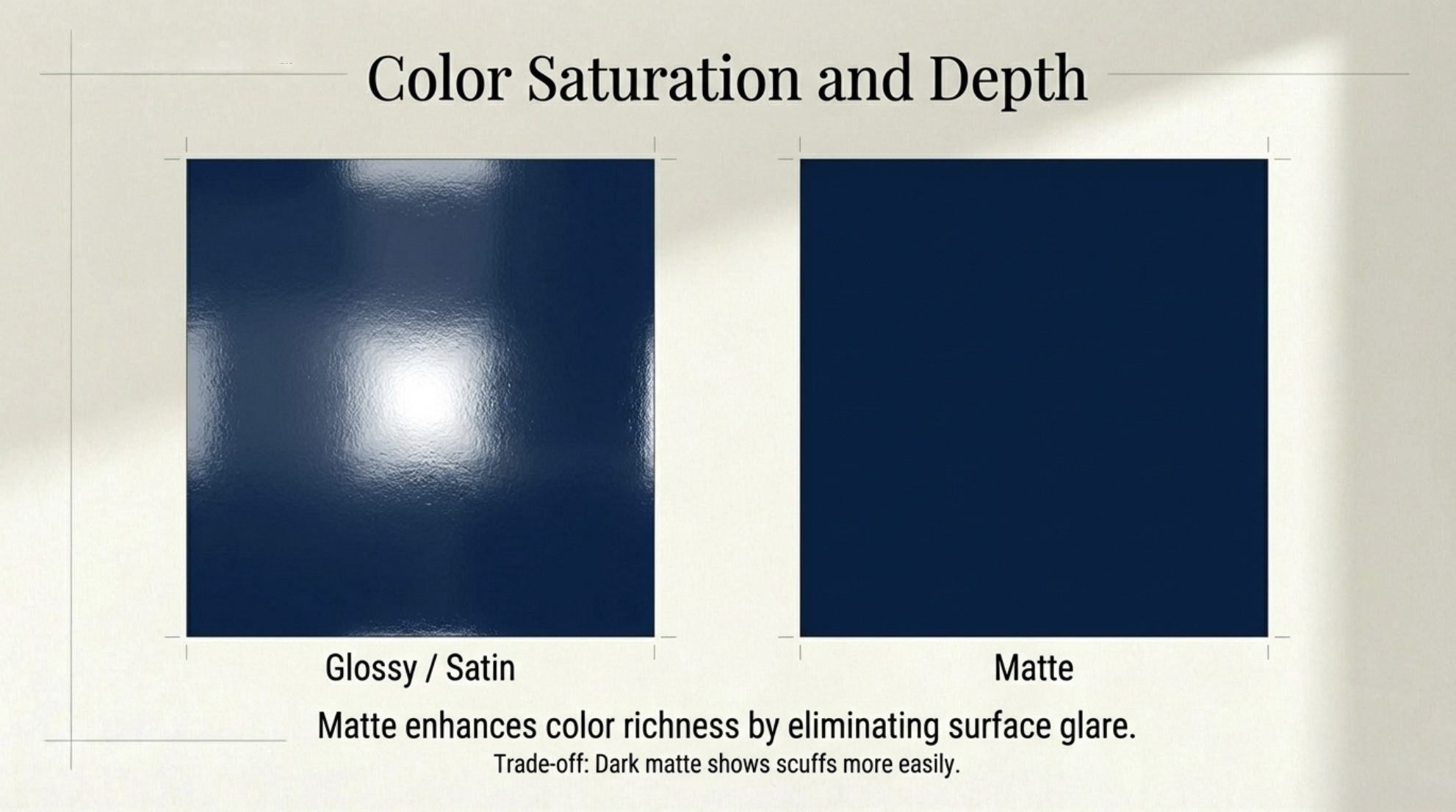
Matte also enhances color richness. Deep blues, charcoal grays, and forest greens appear more saturated in matte because the surface absorbs light rather than reflecting it. The result feels layered and architectural rather than shiny.
The limitation is maintenance. Matte is less durable and less resistant to stains. Fingerprints, scuffs, and dirty marks can appear more quickly in low sheen paints. Cleaning requires a gentle approach. A damp microfiber towel works. Aggressive rubbing or polish will damage the surface.
Dark matte paint can show rub marks more than lighter tones. This is not a product defect. It is the tradeoff for depth and softness.
Why Satin Paint Outperforms in Active Spaces
Satin paint sits above matte on the sheen spectrum. It has a soft glow but does not reach semi gloss or high gloss levels of shine. This slight sheen improves durability and cleanability.
In practical terms, satin paint finishes are better for walls that need to be wiped regularly. Kitchens, bathrooms, hallways, and high traffic areas benefit from satin. Moisture exposure is another factor. Satin resists humidity better than matte, which makes it more suitable for bathrooms.
However, satin reflects light. That means surface preparation must be precise. Any bumps, swirls, or patch marks will become visible once the paint dries. Before applying satin paint, surfaces should be sanded smooth, primed properly, and inspected under directional light.
For designers, this is a coordination issue. If the drywall finish is not Level 4 or better, satin will expose flaws. Matte gives more tolerance. Satin demands perfection.
Understanding the Sheen Spectrum: From Low Sheen to High Gloss
sheen spectrum from low sheen to high gloss paint finishes
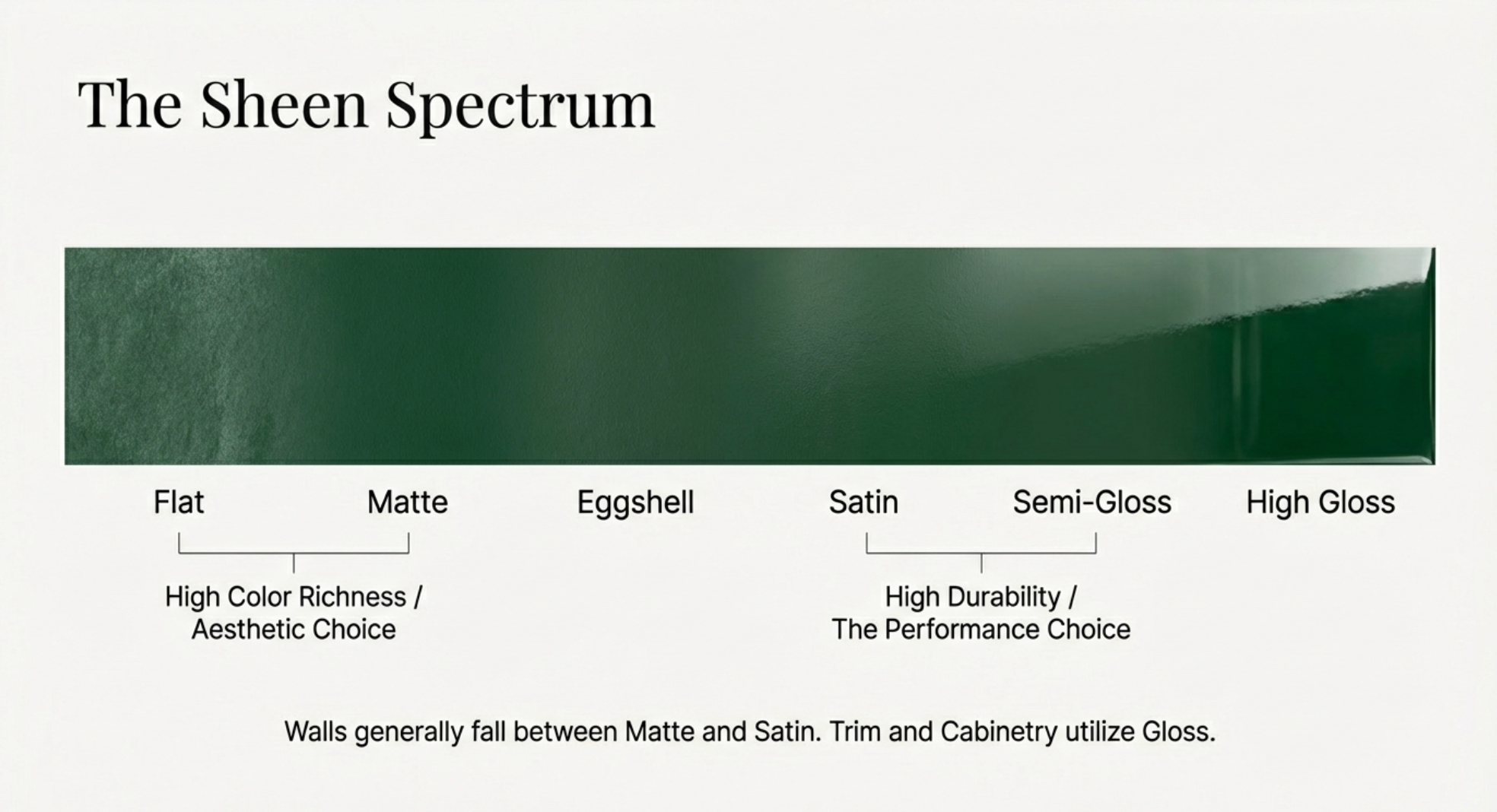
Every paint finish falls along a sheen spectrum: flat, matte, eggshell, satin, semi gloss, and high gloss. The higher the sheen, the more light the surface reflects.
Low sheen paints such as matte and flat absorb light. Eggshell introduces a slight contrast. Satin increases reflectivity. Semi gloss and high gloss create a shiny, almost polished appearance.
Glossy finish and high gloss products are typically reserved for trim, doors, and cabinetry because they are highly durable. They also highlight every surface imperfection. On interior walls, they are rarely used unless a dramatic design statement is intended.
Sheen affects perceived color depth. Lower sheen creates richness and visual depth. Higher gloss creates brightness and contrast but can flatten the emotional warmth of a room.
How Sheen Affects Light and Imperfections
Light defines how paint performs visually. When light hits a matte wall, it diffuses. When it hits satin or gloss, it reflects. Reflection makes imperfections visible.
In a bright room with large windows, satin paint may amplify subtle waves in drywall. The same wall painted in matte would appear smoother. This is important when working with natural light sources.
In very small, dim rooms, too much matte can absorb light and make the space feel flat. In those cases, a slight satin finish can help bounce light and improve perceived brightness.
The decision is not about which finish is better in the abstract. It is about how light interacts with that specific wall and surface condition.
Where to Use Matte Paint on Interior Walls and Accent Walls
Matte paint works best in low traffic areas. Bedrooms, living rooms, family rooms, and formal dining rooms benefit from its softness. Ceilings are almost always matte to prevent unwanted shine from overhead lighting.
color saturation and depth of glossy/satin vs matte paint finish
Matte is especially effective on accent walls. Deep colors gain depth when applied in a matte finish. The absence of shine increases contrast and makes the color feel intentional rather than decorative.
Avoid matte in bathrooms with high moisture, kitchens exposed to grease, or hallways where fingerprints are common. In those rooms, satin paint finishes are more durable and easier to clean.
How to Choose the Right Finish for Your Project
Choosing the right finish requires evaluating four factors: traffic, lighting, surface quality, and maintenance expectations.
First, assess how often the wall will be touched or cleaned. High contact walls need satin. Low traffic areas can use matte.
Second, observe lighting. Check how natural and artificial light hits the surface at different times of day. Light determines how sheen behaves.
Third, inspect the wall surface. If imperfections exist and correction is limited, matte hides them. If surfaces are perfectly smooth, satin becomes viable.
Finally, consider maintenance preferences. Some homeowners accept gentle cleaning. Others expect to wash walls regularly. The right finish aligns with those expectations.
Benjamin Moore and Product Line Considerations
Benjamin Moore offers several matte and satin product lines suitable for residential work. Regal Select Matte and Aura Matte are commonly specified for interior walls. Each product line has different scrub ratings and durability metrics.
Do not select a paint finish based on sheen alone. Review manufacturer technical datasheets for wash resistance and recommended applications. Premium matte products often offer better durability than budget flat paint.
Professional painters frequently prefer higher-grade lines because they reduce burnishing and improve coverage consistency. Product quality affects life cycle performance more than brand name alone.
Application Tips for Matte Paint
Application quality determines final appearance. Even though matte hides imperfections, it does not correct poor preparation.
Surfaces should be patched, sanded smooth, and primed where necessary. Dust must be removed before painting. Use high-quality rollers to avoid texture inconsistency. Apply multiple thin coats rather than one heavy coat to create a smooth, even finish.
If roller drag occurs, verify environmental conditions and product instructions before adjusting viscosity. Temperature and humidity influence how paint flows and levels.
Consistency and controlled technique create a refined surface.
Maintenance and Care for Matte Finish Paint
Matte paint requires controlled cleaning. Use a damp microfiber towel to gently wipe stains. Avoid aggressive scrubbing, polish, or wax. Rinse lightly with clean water and pat dry.
For scuffs, test cleaning in an inconspicuous area first. If the mark remains, touch up using the original paint and batch. Store leftover paint properly for future repairs.
Understanding these limits prevents accidental damage and preserves the finish appearance.
Pros and Cons of Matte and Satin Paint
Matte paint hides imperfections, offers rich depth, and blends touch-ups well. It is less durable and more sensitive to aggressive cleaning.
Satin paint is durable, washable, and moisture resistant. It highlights surface imperfections and demands better preparation.
The right finish depends on performance requirements, not aesthetics alone.
High-End Painting Services by CooperBuild
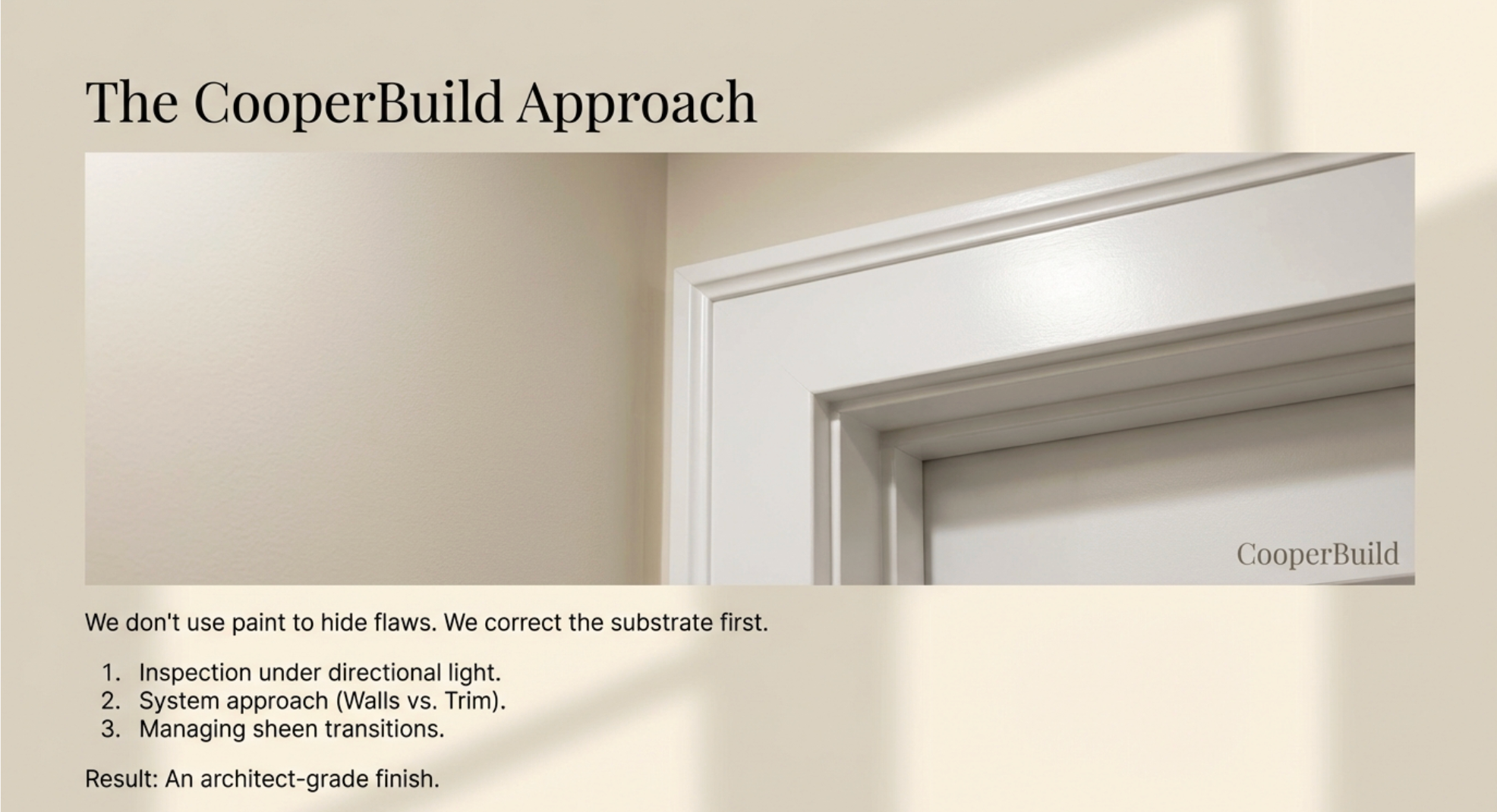
CooperBuild high-end interior painting approach on matte paints
CooperBuild delivers high-end interior painting with a focus on surface preparation and controlled execution. We do not rely on paint to hide flaws. We correct the substrate first.
Our process includes detailed surface inspection, precision patching, sanding under directional light, and specification of premium products such as Benjamin Moore. Trim, doors, and walls are treated as separate systems, each with the appropriate paint finish.
We manage sheen transitions carefully. Matte walls, satin trim, and semi gloss details are coordinated to create contrast without visual conflict. Moisture levels, light direction, and room function guide our recommendations.
The result is a smooth, durable, architect-grade finish that elevates the entire room. If your project demands technical precision and clean execution, CooperBuild delivers the right finish every time.
Also read: What is Eggshell Paint and When Should You Use It? Learn how eggshell sits between matte and satin finishes and where it performs best.
Frequently Asked Questions About Matte and Satin Paint
Subscribe to Our Newsletter
Get the latest insights, trends, and news from the construction industry delivered straight to your inbox.
We respect your privacy. Unsubscribe at any time.